The Job Search Data Exposure Report
Looking for a job means selling your skills, but it can also mean giving away more personal information than you realize. We surveyed 1,012 U.S. adults who had applied for at least one job in the past 12 months to learn what information they shared, what risks they encountered, and how they responded. The findings reveal how quickly personal data can spread during a job search, and why controlling what you share can matter long after you submit an application.
Key Takeaways
- The average job seeker has handed over their personal data 13 times while searching for a job.
- 37% of job seekers have provided their Social Security number during their search.
- 83% of job seekers don't know how long employers or job boards retain their personal information, and 84% have never asked for it to be deleted.
- 55% of recent job seekers were targeted by a fake recruiter, and among those targeted, 17% had their identity or an online account misused.
- 65% of job seekers abandon job applications that demand too much personal information.
Your Job Search Can Leave a Lasting Data Trail
Every application can add another copy of your information to an employer, recruiter, or job platform's records. Once you submit it, keeping track of where that information goes can become difficult.
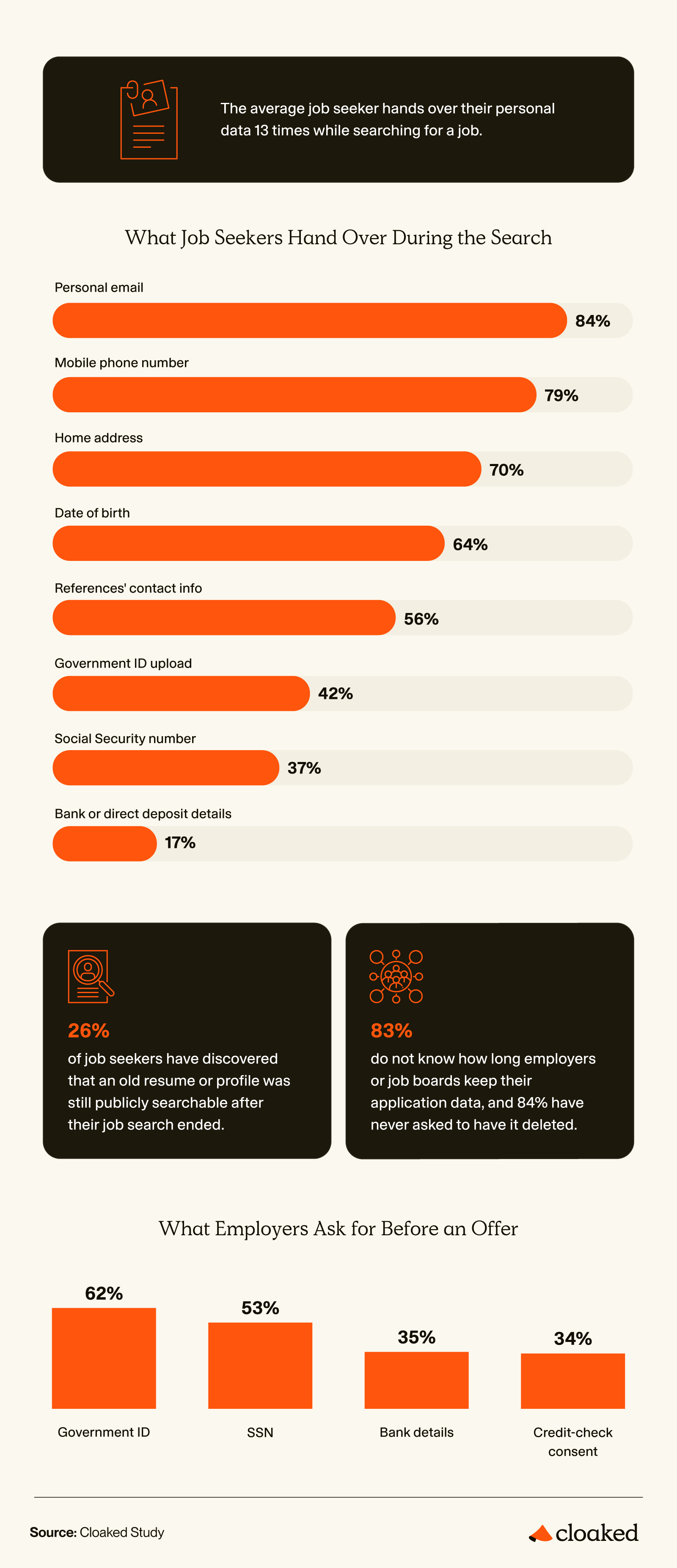
The average job seeker had handed over personal data 13 times while looking for work and shared an average of 6 pieces of personal information during their search. Some of that information was particularly sensitive: 37% said they had handed over their Social Security number, and 17% shared banking details.
Exposure varied considerably by industry. Half of hospitality and food workers (50%) had provided their Social Security number, followed by:
- 45% of manufacturing workers
- 41% of healthcare workers
- 38% of education workers
- 37% of retail workers
- 27% of finance workers
What happened to that information afterward was often unclear. Most job seekers (83%) didn't know how long employers or job boards retained their personal information, while 84% had never asked to have their information deleted. More than 1 in 4 (26%) had even discovered an old resume or profile that remained publicly searchable after their job search ended.
For anyone concerned about privacy, that creates a data removal challenge. Applying for jobs can leave copies of your information scattered across organizations and platforms even after you've moved on.
Fake Recruiters Are Reaching Job Seekers Across Channels
A message from a recruiter can feel like progress, especially during a long job search. But when outreach comes through several familiar channels at once, separating legitimate opportunities from scams can get harder.
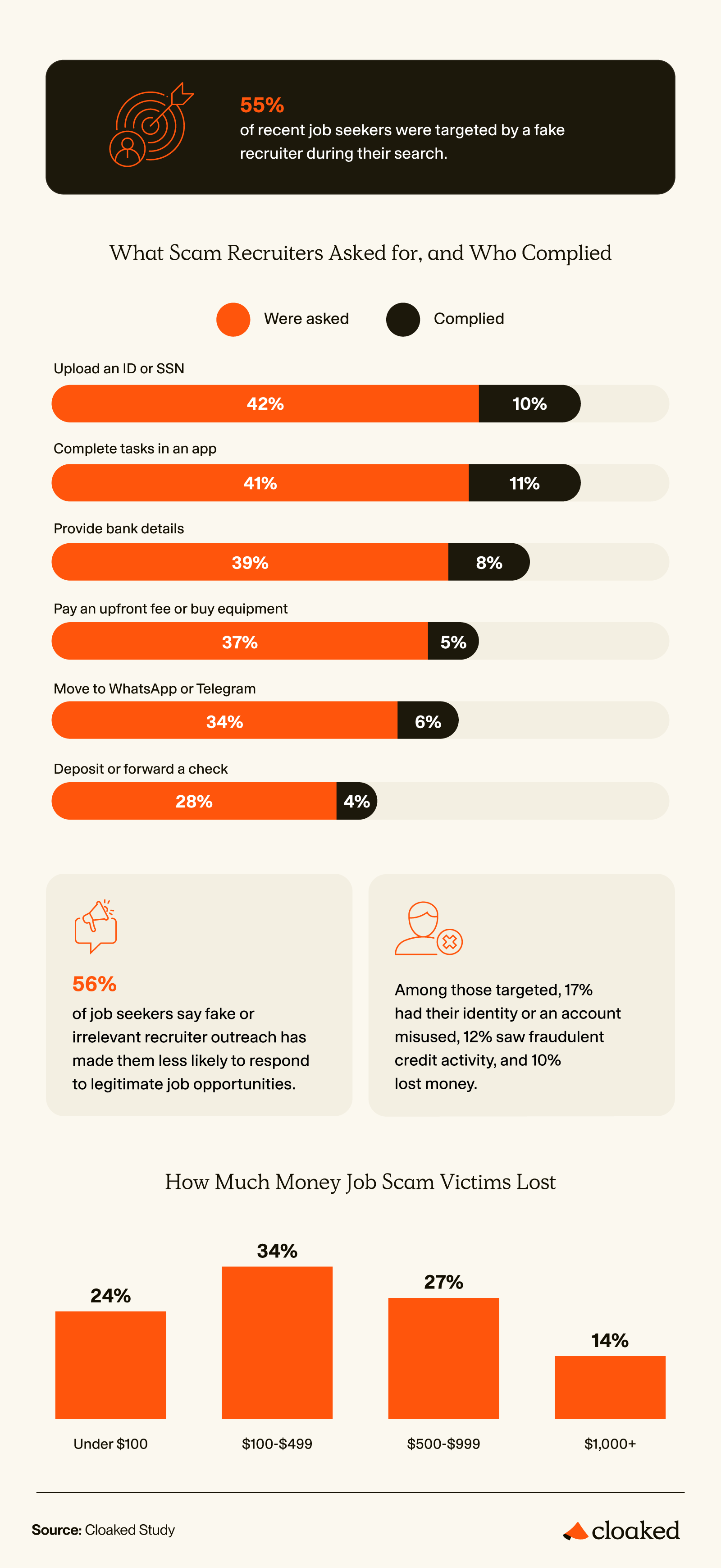
More than half of recent job seekers (55%) had been targeted by a fake recruiter. Among those targeted, 17% said their identity or an online account had been misused, showing how a promising-looking job opportunity could pose a risk of identity theft or compromised account security.
The most common places respondents encountered suspected fake job outreach were:
- Emails (88%)
- Text messages (84%)
- LinkedIn messages (68%)
- Phone calls (63%)
- WhatsApp or Telegram (31%)
- Instagram or TikTok direct messages (27%)
AI added another layer of uncertainty. Most job seekers who suspected AI-generated or deepfake content encountered it in a job posting or listing (60%), while 29% suspected a recruiter's profile photo and 10% suspected a live video interviewer.
Some job seekers also acted on scam recruiters' requests. Overall, 19% had complied with a scam recruiter's demand, with Gen Z reporting the highest rate at 27%. Millennials followed at 18%, while 14% of Gen X respondents had complied.
Job Seekers Are Setting New Privacy Boundaries
Giving up personal information doesn't have to be an automatic part of every application. Many job seekers are already drawing a line when employers or platforms ask for more than they're comfortable sharing.
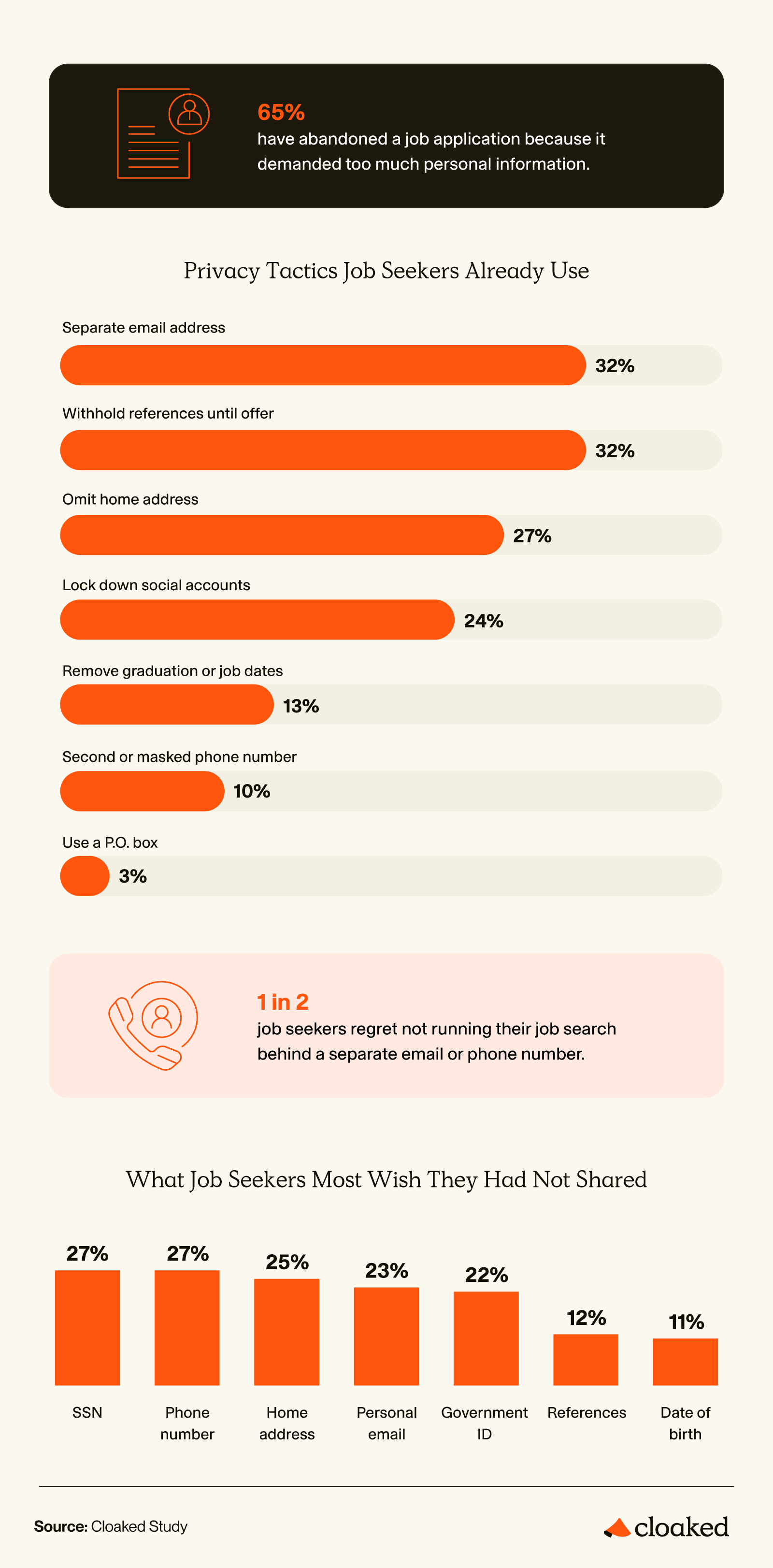
Nearly two-thirds of job seekers (65%) had abandoned applications that demanded too much personal information. That suggests privacy concerns aren't merely theoretical. They're strong enough to make applicants walk away from potential opportunities.
Looking ahead, 47% said they would conduct their entire next job search using separate contact information from their personal accounts. Even more (83%) said they would use a free masked phone number and email during their next search.
Avoiding unwanted contact was a major reason for that interest. Among the reasons provided, 37% would use masked contact information to block scam and fraud targeting, while 36% would use it to block spam. Separating job-search contact details from your everyday identity can give you another layer of control over who can continue reaching you once the search is over.
A More Private Way to Look for Your Next Job
A job search requires sharing personal information, but you can still control how much of your identity you expose. Cloaked helps job seekers create unique email addresses and phone numbers for applications and recruiter outreach, making it easier to limit spam, scams, and unwanted contact without giving out personal details. We can also help remove information already exposed across data brokers and people-search sites and monitor for new risks over time. With stronger boundaries around what you share and where you share it, you can keep the focus on finding the right opportunity rather than managing privacy concerns.
Methodology
Cloak surveyed 1,012 U.S. adults who had applied to at least one job in the past 12 months about the personal information they hand over during a job search and what it exposes them to. Respondents were distributed across genders, generations, and industries. The gender breakdown was women (54%), men (44%), and non-binary or preferring not to answer (2%). The generations represented included millennials (50%), Gen Z (24%), Gen X (21%), and baby boomers (4%). The survey was conducted in August 2026.
About Cloaked
At Cloaked, we empower people to own their data, enabling smarter AI and apps without compromising privacy and safety.
Fair Use Statement
The information in this article may be used for noncommercial purposes only. If you share these findings, please provide proper attribution and a link back to Cloaked.